
Ottawa needs lobbyists

Ottawa is a foreign country.
People outside it need guides and translators. They don’t speak the same language, they don’t know their way around, geographically or politically. Even the vocabulary is foreign.
Normal people don’t say things like “I need to crosswalk this MC,” “Do you have an agenda item for the MIN-DM (pronounced mindim)?” or “We need a four corners.” In Ottawa, that jargon is standard English. Even the word stakeholder is strange. I use it dozens of times a day; normal people never do.
And the longer someone stays in government, the more disconnected they get from the rest of the country. As one colleague likes to say, some people become Otta-washed. They live and breathe the bubble until they forget what the rest of the country looks like.
If it’s that confusing for Canadians, imagine being from another country. If you’re a foreign company trying to navigate Ottawa, you absolutely need a local guide. Canadians often forget how deeply passive-aggressive we are. We almost never say what we mean.
A sentence like “That’s interesting” could mean anything from “Tell me more” to “That’s the dumbest thing I’ve ever heard.” Good luck figuring out which. And if someone responds to your idea with “That’s very brave of you,” they don’t think you’re brave. They think you’re stupid.
This is why lobbying and stakeholder management matter. It’s not about smoke-filled backrooms or shady deals. It’s about connecting a government that speaks fluent bureaucrat with a country, and sometimes an entire world, that doesn’t.
The truth is, people misunderstand how politics and lobbying actually work. Popular culture hasn’t helped. Too many people think it’s like House of Cards. Dark, manipulative, full of secret schemes. I’ve been in this world for more than twenty years. It’s not House of Cards. It’s Veep.
Government is chaos. It’s drinking from a firehose all day. Political staff spend most of their time just trying to keep their heads above water. Most of the so-called scandals you see in the news are the result of human error, not elaborate plots.
Lobbyists and good stakeholder managers inside government exist to keep the system from breaking down. They’re the ones who make sure important details don’t fall through the cracks.
Before anyone rolls their eyes, yes, I’m a consultant lobbyist. And yes, I know how that sounds. But I say this sincerely: stakeholder engagement isn’t about access for access’s sake. It’s about better policy and better outcomes. That’s something everyone should want, in both the private sector and government.
The civil service is well intentioned. That said, it’s made up of human beings, and human beings are imperfect and not all-knowing. Ministers operate with incomplete data. The bureaucracy has habits, biases, and blind spots, and those don’t always match the government’s political priorities. The public service sees the world through the programs it runs. Stakeholders, for all their flaws, often see what the system can’t.
They’re the first to spot when good intentions collide with real-world consequences.
That’s why I find it odd when ministers refuse to meet consultant lobbyists. I recently heard about one with a strict rule against it. It’s not the first time I’ve heard that line. I even remember a Conservative minister who said the same thing. Funny enough, he now works as a consultant lobbyist. Which is delicious.
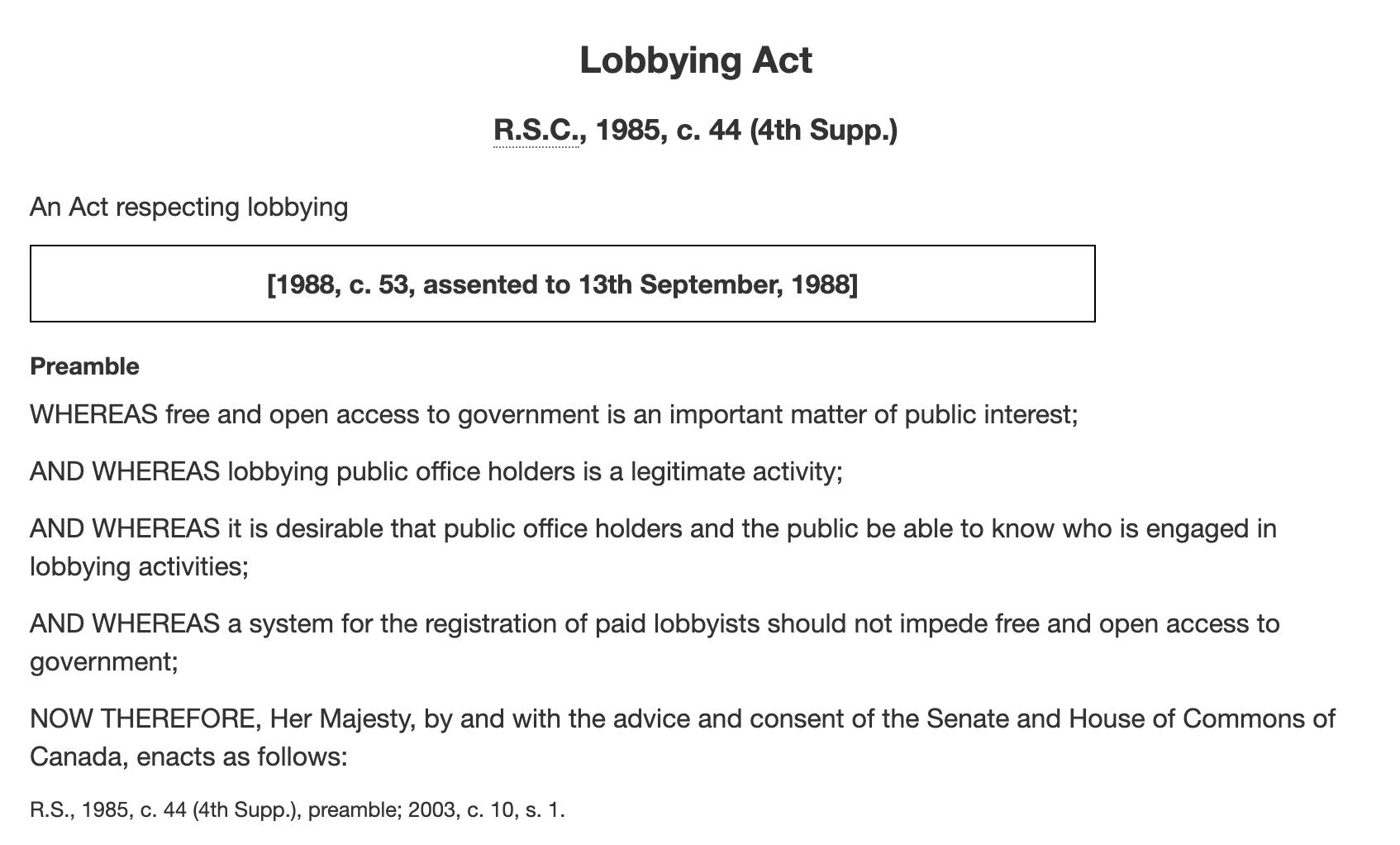
Putting my personal offence aside, the rule is odd. Maybe it’s about time management. Fair enough. Ministers have only so many hours in the day. Maybe it’s about optics and they don’t want to appear on the lobby registry. I struggle to see why that’s bad. Maybe they think they’ll get a better meeting by going straight to the stakeholder. Maybe. It depends on the consultant and the stakeholder I suppose.
But one thing’s certain: this kind of rule punishes small organizations.
Not every company or community group has an in-house government relations team. Most don’t. Many can’t afford one. So when a minister says “I don’t meet with consultant lobbyists,” what they’re really saying is “I only meet with organizations wealthy enough to have their own.”
That’s not transparency. That’s a velvet rope.
The other half of the equation is inside government. Good stakeholder managers and policy advisors can make all the difference. They’re the bridge between politics, policy, and the public. They manage expectations, keep relationships healthy, and help ministers see what’s happening on the ground. They’re often the difference between a smooth rollout and a front-page mess.
But even when meetings happen, clarity is often missing. I’ve watched staffers twist themselves into knots trying not to offend anyone. They confuse politeness with avoidance.
Here’s the truth: a yes is great. A no is fine. But a no disguised as “maybe” is the worst answer of all. It wastes time, sets false expectations, and guarantees hard feelings later. If your answer is no, just say no. At least it’s honest. Stakeholders can revise their pitch, rethink their timing, or move on. Clarity is kindness.
And for the love of all things holy, answer your email. Ignoring a meeting request doesn’t make it disappear. It just guarantees a follow-up every seven days, like a recurring calendar reminder from the universe. You’re not avoiding work. You’re scheduling it for later.
At its best, stakeholder relations isn’t about access. It’s about accuracy. It’s how ministers and their teams stay grounded in reality, not rhetoric.
The goal isn’t to say yes to everyone. It’s to understand what you’re saying yes and no to, and why.
And it all starts with answering the email